Many couples dreaming of a child face difficulties when trying to conceive. Often, the first thought—especially in societies where it has long been assumed that “the problem is with the woman”—is the worrying question: “What if something is wrong with me?”
But the truth is much more complicated—and honest.
Infertility is rarely a one-sided issue. Sometimes it is related to the man. Sometimes it involves both partners. And sometimes the cause isn’t anatomical at all, but linked to lifestyle, stress, or even unnoticed nutritional imbalances.
Today, we will talk about why it is important to approach the issue together, what hidden factors may be hindering conception, and how modern medicine helps find solutions without blaming anyone.
Infertility Is Not Always a “Women’s” Issue
For a long time, women were the ones under close scrutiny when a couple could not conceive. Tests, examinations, procedures—often, it all began with her.
However, science has long proven that nearly 50% of infertility cases involve male factors—or both partners.
Here is the breakdown of causes (according to the World Health Organization):
- Female factors only: ~30-40%
- Male factors only: ~30-40%
- Combined factors: ~10-15%
- Unexplained infertility: ~10%
This means that in most cases, the issue is not “organism errors” but a combination of physiological, hormonal, and lifestyle factors—and this can involve both partners.
What Can Be the Cause in Women?
- Ovulation Disorders
One of the most common causes of infertility is the absence or irregularity of ovulation. Ovulation is the moment when a mature egg is released from the ovary and becomes available for fertilization. If this doesn’t happen, conception is impossible.
Ovulation disorders can be caused by several factors:
-
- Polycystic Ovary Syndrome (PCOS): This hormonal disorder causes the ovaries to produce excessive male hormones (androgens), which interfere with normal follicle maturation. Women with PCOS often experience:
- Irregular or absent periods
- Elevated insulin levels
- Overweight
- Acne
- Excessive hair growth on the face and body
- Polycystic Ovary Syndrome (PCOS): This hormonal disorder causes the ovaries to produce excessive male hormones (androgens), which interfere with normal follicle maturation. Women with PCOS often experience:
PCOS is one of the most common causes of anovulatory infertility, but with the right treatment, the chances of conception remain high.
- Thyroid Disorders
The thyroid plays a crucial role in regulating metabolism and hormonal balance. Hypothyroidism (underactive thyroid) or hyperthyroidism (overactive thyroid) can disrupt the menstrual cycle and suppress ovulation. Even small deviations in TSH, T3, and T4 levels can affect fertility. - Excess Weight or Exhaustion
Adipose tissue is involved in estrogen production. With excessive weight, estrogen levels may be too high, disrupting signals from the hypothalamus and pituitary gland, which control ovulation. On the other hand, severe weight loss (e.g., due to anorexia or excessive exercise) can “shut off” reproductive function as the body perceives the conditions as unfavorable for pregnancy. - Problems with the Uterus or Fallopian Tubes
Even with normal ovulation, obstacles in the uterus or fallopian tubes can prevent conception or implantation.- Adhesions (Scar Tissue): Adhesions can form after surgical procedures (e.g., ectopic pregnancy, fibroid removal), infections (especially chlamydia, mycoplasma), or pelvic inflammatory diseases. These adhesions can block the fallopian tubes or restrict the mobility of the ovaries and uterus, interfering with egg and sperm transport.
- Endometriosis: This condition occurs when tissue similar to the uterine lining (endometrium) grows outside the uterus—on the ovaries, fallopian tubes, and abdominal lining. Endometriosis causes chronic inflammation, adhesions, pain, and can disrupt both ovulation and the ability of the egg to meet the sperm. Many women with endometriosis maintain ovulation, but conception is hindered due to altered anatomy and immune disturbances.
- Polyps and Fibroids: Endometrial polyps (benign growths of the uterine lining) can prevent embryo implantation. Uterine fibroids (benign tumors in the muscle layer of the uterus) are especially problematic when they are located within the uterine wall or under the mucosa, as they distort the uterine cavity and impair blood supply to the endometrium.
- Fallopian Tube Blockage: If one or both fallopian tubes are blocked, sperm cannot reach the egg. Causes include infections, surgeries, and ectopic pregnancy. This can be diagnosed through hysterosalpingography (X-ray with contrast) or laparoscopy.
- Decreased Ovarian Reserve
Ovarian reserve refers to the number and quality of eggs left in the ovaries. It naturally decreases with age, especially after 35. However, in some women, this process accelerates.
Factors contributing to early reserve depletion:
-
- Genetic predisposition
- Past ovarian surgeries
- Chemotherapy or radiation therapy
- Autoimmune diseases
- Smoking
Diagnosis involves measuring anti-Müllerian hormone (AMH), FSH levels, and counting antral follicles via ultrasound. A low reserve does not mean pregnancy is impossible but may require more active approaches like IVF or the use of donor eggs.
What can be the issue with men?
Poor sperm quality
Sperm quality problems are one of the most common, yet often underestimated causes of infertility. Meanwhile, the male factor is involved in nearly half of all cases.
The main parameters evaluated in a sperm analysis include:
- Oligozoospermia — low sperm count
The norm is more than 15 million sperm per milliliter. If the count is lower, the chances of natural conception decrease. - Asthenozoospermia — low motility
Motility refers to the ability of sperm to move actively towards the egg. According to WHO standards, at least 40% of sperm should be motile. - Teratozoospermia — abnormal morphology
Even with a good sperm count and motility, if most sperm have abnormal head, neck, or tail structures, their ability to fertilize an egg is reduced.
These abnormalities often occur together — then it’s referred to as oligoasthenoteratozoospermia (OAT syndrome).
Hormonal disorders
Hormones play a key role in sperm production. The primary regulators are luteinizing hormone (LH) and follicle-stimulating hormone (FSH), which are produced by the pituitary gland, as well as testosterone, which is produced in the testes.
Disruptions can be:
- Primary — when the testes do not respond to hormones (e.g., in genetic conditions like Klinefelter syndrome).
- Secondary — when the pituitary or hypothalamus sends insufficient signals (e.g., due to tumors, injuries, obesity).
Levels of prolactin and thyroid hormones are also important — their imbalance can also affect fertility.
Physical and external factors
- Varicocele
Varicocele is the expansion of veins in the scrotum, most commonly on the left side. It leads to blood stagnation, increased temperature in the testicle, and disrupted blood supply, creating unfavorable conditions for sperm production. Varicocele is the most common correctable cause of male infertility. Surgical treatment (varicocelectomy) often improves sperm parameters. - Infections and injuries
Infections like mumps, especially when contracted during puberty, can damage testicular tissue and reduce sperm production. Epididymitis, orchitis, and sexually transmitted infections can also be harmful.
Trauma to the scrotum, surgeries in the groin area, or on the bladder can damage the vas deferens.
- Overheating
The testes are located outside the body because sperm production requires a temperature 2–3°C lower than body temperature. Prolonged overheating — such as frequent sauna visits, wearing tight underwear, or long periods with a laptop on the lap — can temporarily worsen sperm quality.
It’s important to understand that many of these conditions are treatable or correctable, especially if the couple takes action early and systematically. The key first step is realizing that infertility is not a diagnosis but a medical situation that can be investigated, understood, and changed.
Why is it important to examine both partners?
Because time is the most valuable resource, especially when it comes to family planning.
The longer a couple focuses solely on one partner, especially when trying to find a “culprit,” the more they miss the opportunity to act timely and effectively.
Many couples begin with the woman undergoing full examinations: hormones, ultrasound, tests. Only after months of waiting and disappointments does the man provide a sperm analysis — and it turns out the problem was with him.
This is not uncommon. And it’s a reversible loss of time that could have been avoided.
Fertility is a process that involves both partners.
To understand what is hindering conception, both participants need to be assessed — simultaneously and equally.
Why shouldn’t the investigation start only with the woman?
First, because male infertility factors are as common as female ones. According to the WHO, about 40–50% of infertility cases are related to male problems.
Moreover, in 10–15% of cases, the cause is combined factors — meaning both the woman and the man have deviations that together make natural conception impossible.
Second, female fertility declines with age faster than many think. After the age of 35, the quantity and quality of eggs decrease non-linearly. Every month matters. If six months are spent searching for a problem only with the woman, and then it turns out that the issue is with sperm, this can cost the chance for natural conception or complicate treatment.
Therefore, modern clinical recommendations (including those from the European Society of Human Reproduction and Embryology — ESHRE) clearly state that:
The examination should be joint from the very beginning.
How to begin? Primary diagnosis plan
The best approach is systematic and synchronized. Both partners undergo basic tests within one to two months. This allows the doctor to quickly assess the situation and propose further steps — whether it’s lifestyle changes, medical treatment, or moving to assisted reproductive technologies.
What is checked in women?
- Hormonal profile
A test is done on specific days of the menstrual cycle (usually on days 2–5):- FSH and LH — pituitary hormones that regulate ovarian function. High FSH may indicate a decrease in ovarian reserve.
- Prolactin — elevated levels suppress ovulation.
- Anti-Müllerian hormone (AMH) — the best marker of ovarian reserve. It shows how many follicles remain.
- Estradiol — the main female hormone, assessed together with FSH.
- TSH, Free T4, Thyroid Peroxidase Antibodies — to exclude thyroid problems that could interfere with pregnancy.
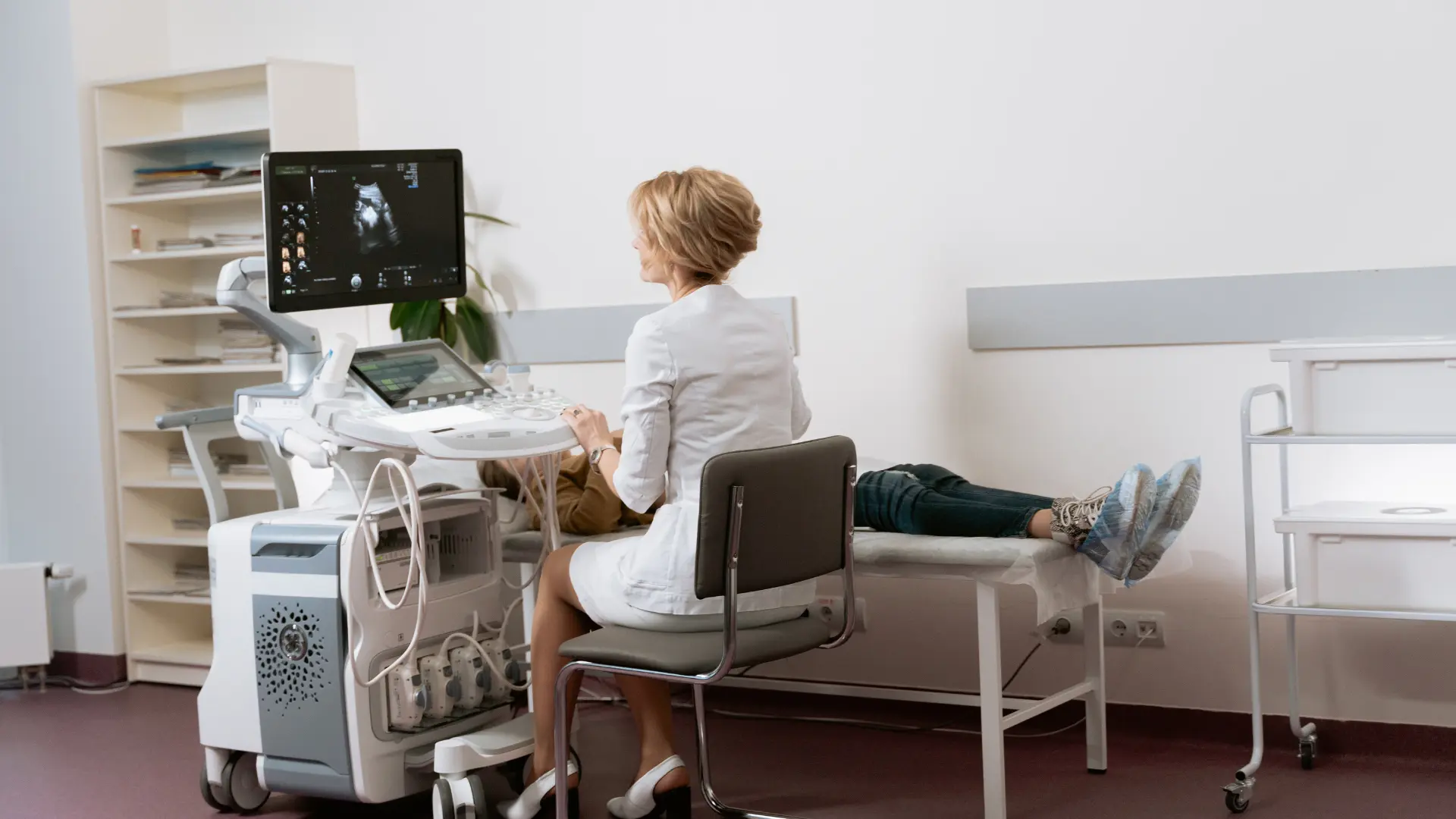
- Pelvic ultrasound (transvaginal)
This allows assessment of:- The structure of the uterus (presence of fibroids, polyps),
- The condition of the endometrium,
- The size and appearance of the ovaries (signs of PCOS),
- The presence of fluid in the pelvis (possible adhesions).
- Fallopian tube patency check
Without open tubes, sperm cannot meet the egg. The most common method is hysterosalpingography (HSG). A contrast medium is introduced through the cervical canal, and an X-ray is taken. By observing the contrast movement, the doctor can see if the tubes are passable.
An alternative is sonohysterosalpingography, where ultrasound and a special solution are used. This method is less invasive and does not require radiation. - Sexually transmitted infections (STI) testing
Some infections, such as chlamydia, mycoplasma, and ureaplasma, can be asymptomatic but cause inflammation, adhesions, and tubal obstruction. Early detection and treatment help preserve fertility.
What is tested in men?
- Semen Analysis – The main test
This is an analysis of the ejaculate that evaluates three key parameters:
- Volume and pH of the semen
- Sperm concentration (how many millions per milliliter)
- Motility (how many are actively moving)
- Morphology (the percentage of sperm with normal shape)
The semen analysis is done after 2–7 days of abstinence. The test should be conducted in a certified laboratory.
If the result is poor, it should be repeated after 2–3 months, as sperm quality can temporarily decrease due to illness, stress, or overheating.
- Hormonal blood test
Especially important if abnormalities are detected in the semen analysis:
- Testosterone – the main male hormone.
- FSH and LH – show how actively the pituitary stimulates the testes.
- Prolactin – excessive amounts can suppress testosterone production.
- TSH and T4 – the thyroid also affects fertility.
- Scrotal Ultrasound
This helps identify:
- Varicocele
- Testicular cysts
- Tumors
- Blood flow disorders
Ultrasound is particularly important when varicocele is suspected or when sperm analysis results are very low.
When to start the examination?
WHO recommendations and international associations in reproductive medicine suggest:
- Under 35 years old: If a couple has been regularly having unprotected sex for 12 months without pregnancy, it’s time to start the examination.
- Over 35 years old: This period is reduced to 6 months, as ovarian reserve declines faster.
- In the case of known issues (e.g., endometriosis, ovarian surgeries, varicocele, irregular periods), the examination can start immediately, even if the conception attempt has been short.
Why joint examination is important – Respect and support
When both partners undergo diagnostic tests together, it:
- Relieves pressure from one person
- Strengthens trust in the relationship
- Shows that you are a team, not opponents
Infertility is not a test of relationship strength. It’s a challenge that is easier to overcome when you walk the path together, rather than in turn.
What to do after the examination?
Based on the results, the doctor will determine the next steps:
- Simple corrections (diet, routine, supplements)
- Medical treatment (e.g., ovulation stimulation)
- Surgical intervention (e.g., varicocele removal, adhesions resection)
- Or moving to IVF, ICSI, and other ART methods.
But the most important thing is, now you know what you are dealing with.
And knowledge is the first step toward a solution.
Main hidden causes of infertility
Apart from obvious medical diagnoses, there are factors that are rarely checked but greatly influence fertility:
- Chronic stress
Stress directly impacts hormonal balance:
- In women – disrupts the cycle and ovulation.
- In men – lowers testosterone levels and sperm quality.
When the brain is in “survival mode,” it suppresses reproductive function, as if saying: “This is not the right time for children.”
- Nutrition and nutrient deficiency
Lack of essential micronutrients can hinder conception:
For women:
- Folate – essential for egg formation and preventing developmental defects.
- Vitamin D – influences ovulation and implantation.
- Omega-3 – improves egg quality.
- Iron, zinc, selenium – important for hormonal balance.
For men:
- Zinc and selenium – critically important for sperm motility.
- Vitamin C and E – protect sperm from oxidative stress.
- Coenzyme Q10 – improves sperm energy.
Studies show that men taking fertility supplements see sperm quality improve within 3 months.
- Lifestyle
- Smoking – harms both egg and sperm quality.
- Alcohol – reduces fertility in both sexes.
- Excess or insufficient weight – disrupts hormonal balance.
- Sedentary lifestyle – impairs blood circulation in the pelvic organs.
Treatment approaches: What can be done?
The good news is that in 85–90% of cases, infertility can be corrected. This is not a sentence. It’s a medical condition that can be understood, diagnosed, and changed.
And the sooner the couple starts taking action – systematically and together – the higher the chances of successful conception, whether naturally or with the help of modern technologies.
Treatment is based on the principle “from simple to complex.” First – lifestyle correction and elimination of reversible factors. Then – medical and surgical methods. And, if necessary – assisted reproductive technologies (ART).
Each step makes sense. The key is not to skip steps and not rush.
- Lifestyle correction
Often, the key unnoticed reasons for reduced fertility lie here. Lifestyle directly impacts hormonal balance, egg and sperm quality, and overall body health.
Balanced nutrition
Proper nutrition is the foundation of reproductive health recovery. Studies show that a diet rich in healthy fats, fiber, and antioxidants can improve fertility in both partners.
What to include:
- Vegetables and greens – sources of folate, B vitamins, magnesium.
- Whole grains – stabilize blood sugar, which is especially important for PCOS.
- Fatty fish (salmon, mackerel, sardines) – contains omega-3s needed for hormone synthesis and cell protection.
- Nuts, seeds (pumpkin, flax), avocado – sources of healthy fats, zinc, vitamin E.
- Legumes, grains, eggs – high-quality protein without excess saturated fats.
Avoid:
- Trans fats (fast food, pastries)
- Refined sugars
- Processed foods with preservatives.
Regular physical activity
Moderate exercise improves circulation in the pelvic organs, helps control weight, and reduces stress.
But it’s important to keep a balance: excessive training can suppress ovulation, especially in women with low weight.
Optimal – 30 minutes of walking, swimming, or yoga 4–5 times a week.
Quit smoking and limit alcohol
Smoking accelerates ovarian reserve depletion and damages sperm DNA.
Alcohol lowers testosterone levels in men and disrupts hormonal balance in women.
Complete smoking cessation and minimizing alcohol consumption (ideally none) is recommended at least 3–6 months before conception.
Stress management
Chronic stress is one of the most underrated factors in infertility. It increases cortisol, disrupts gonadotropin production, and can temporarily “turn off” the reproductive system.
Effective methods:
- Deep breathing and meditation – even 10 minutes a day reduces anxiety.
- Regular sleep (7–8 hours) – important for hormonal recovery.
- Psychotherapy – especially if there are concerns related to pressure, fears, or past failures.
- Relaxation techniques – progressive muscle relaxation, tai chi, walks in nature.
- Medical treatment
If lifestyle correction doesn’t work or if specific diseases are detected during the diagnosis, targeted medical approaches are applied.
Hormonal therapy
Often used in cases of ovulation disorders:
- Clomiphene citrate or letrozole – drugs that stimulate ovulation in women with PCOS or anovulation.
- Gonadotropins (FSH, LH) – stronger drugs used in cases of poor ovarian response.
- Metformin – for insulin resistance, often combined with PCOS.
- Thyroid hormone replacement – in hypothyroidism.
For men with hormonal disorders, medications stimulating testosterone production or spermatogenesis (e.g., hCG, clomiphene) may be prescribed.
Surgical treatment
Some conditions require surgical intervention:
- Varicocelectomy – removal of enlarged veins in the scrotum. 60–70% of men experience improved semen analysis results after surgery.
- Laparoscopy – used for endometriosis, adhesions, tubal obstruction. Allows removal of lesions and restoration of anatomy.
- Hysteroscopy – removal of polyps, fibroids, adhesions in the uterus. The procedure is done through the cervical canal without incisions.
Infection treatment
If hidden infections (e.g., chlamydia, mycoplasma) are detected, both partners are prescribed a course of antibiotics simultaneously to prevent re-infection. Follow-up testing is conducted after treatment.
- Assisted Reproductive Technologies (ART)
When conservative and surgical methods do not yield results, or when the diagnosis makes natural conception impossible, modern technologies come to the rescue.
Intrauterine Insemination (IUI)
The man’s sperm is “processed” in the laboratory, where the most active sperm are selected. Then, they are introduced directly into the uterus at the time of ovulation.
This method is suitable for:
- Mild sperm abnormalities
- Cervical issues
- Unexplained infertility
It is typically performed for 3-6 cycles, with an effectiveness rate of about 10-15% per attempt.
In Vitro Fertilization (IVF)
Eggs are extracted from the ovaries after hormonal stimulation, fertilized with sperm in the laboratory, and then the developing embryo is transferred into the uterus.
IVF is used in cases of:
- Tubal obstruction
- Severe sperm abnormalities
- Diminished ovarian reserve
- Endometriosis stage III-IV
- Failed IUI attempts
Intracytoplasmic Sperm Injection (ICSI)
A single sperm is injected directly into the egg using a micro-needle.
This is the most effective method for severe male infertility forms, such as oligoasthenoteratozoospermia, zero motility, or post-vasectomy cases.
ICSI is often performed as part of IVF and significantly increases the chances of fertilization.
The Most Important Thing: You Are in This Together
Infertility is not a diagnosis. It is a medical situation that requires understanding, patience, and teamwork.
And most importantly, it is not anyone’s fault. It is a challenge that the couple faces together.
When both partners undergo testing, work on themselves, change their lifestyle, and support each other, the chances of success increase dramatically.
Sometimes the process takes time. Sometimes it requires several approaches. But thousands of couples have gone through this journey—and they became parents.
Not because they were lucky. But because they didn’t give up. Because they acted wisely, together, and with hope.
Infertility is not always a “female” problem. In nearly half of the cases, the cause lies with the male or both partners.
Testing should be joint and timely.
Fertility is affected not only by diseases but also by stress, nutrition, and lifestyle.
Modern medicine offers many solutions—from dietary adjustments to IVF.
The key is to approach this as a team.
You are not alone. And you are not isolated.
Sometimes, simply starting the conversation is enough.