Many women view a visit to the gynecologist as a reaction to a problem: something hurts, unusual discharge appears, or the cycle becomes irregular. In reality, regular check-ups are not about “fixing breakdowns”—they are a strategic investment in your health for decades to come.
Prevention allows us not merely to adjust current indicators, but to prevent complications, preserve fertility, maintain hormonal stability, and support psychological well-being. A woman’s health is the foundation of her quality of life, her career, and her relationships.
What a Regular Check-up Entails: Far More Than Just the Exam Chair
When gynecological examinations come up, many immediately picture the standard exam chair and a sense of awkwardness. In truth, it is much more than that—a comprehensive assessment of a woman’s reproductive and overall health, designed to detect potential issues at their earliest stages and provide personalized preventive guidance. Let us examine each component in detail.
Taking Your Medical History: The Story of Your Body
The examination begins not with the chair, but with a conversation. Your doctor will ask in detail about:
- Your menstrual cycle—its regularity, duration, and any associated symptoms;
- Chronic conditions, past surgeries, or hospitalizations;
- Stress levels, lifestyle habits, and dietary patterns;
- Family history and hereditary risks (for instance, cases of cancer among close relatives);
- Previous pregnancies, births, or complications;
- Current medications, supplements, or hormonal treatments.
This information enables the physician to build a complete picture of your health, determine which investigations are truly necessary, and design an individualized monitoring plan.
The Pelvic Examination: Visual Assessment
During the physical examination, the doctor evaluates the condition of the external genitalia, vagina, and cervix. Key observations include:
- Signs of inflammation, irritation, or infection;
- Presence of condylomas, papillomas, or other growths;
- Changes in mucosal tissue or signs of pelvic organ prolapse.
Even in the absence of discomfort, this examination can uncover hidden issues that, when detected early, are easily managed.
The Pap Smear (Cervical Cytology): Preventing Cervical Cancer
The Pap smear is the gold standard for cervical cancer screening. The procedure is straightforward: cells are gently collected from the surface of the cervix and examined for abnormalities.
Its greatest value lies in detecting precancerous changes at a stage when treatment is highly effective and fully reversible. Regular Pap testing significantly reduces the risk of developing cervical cancer.
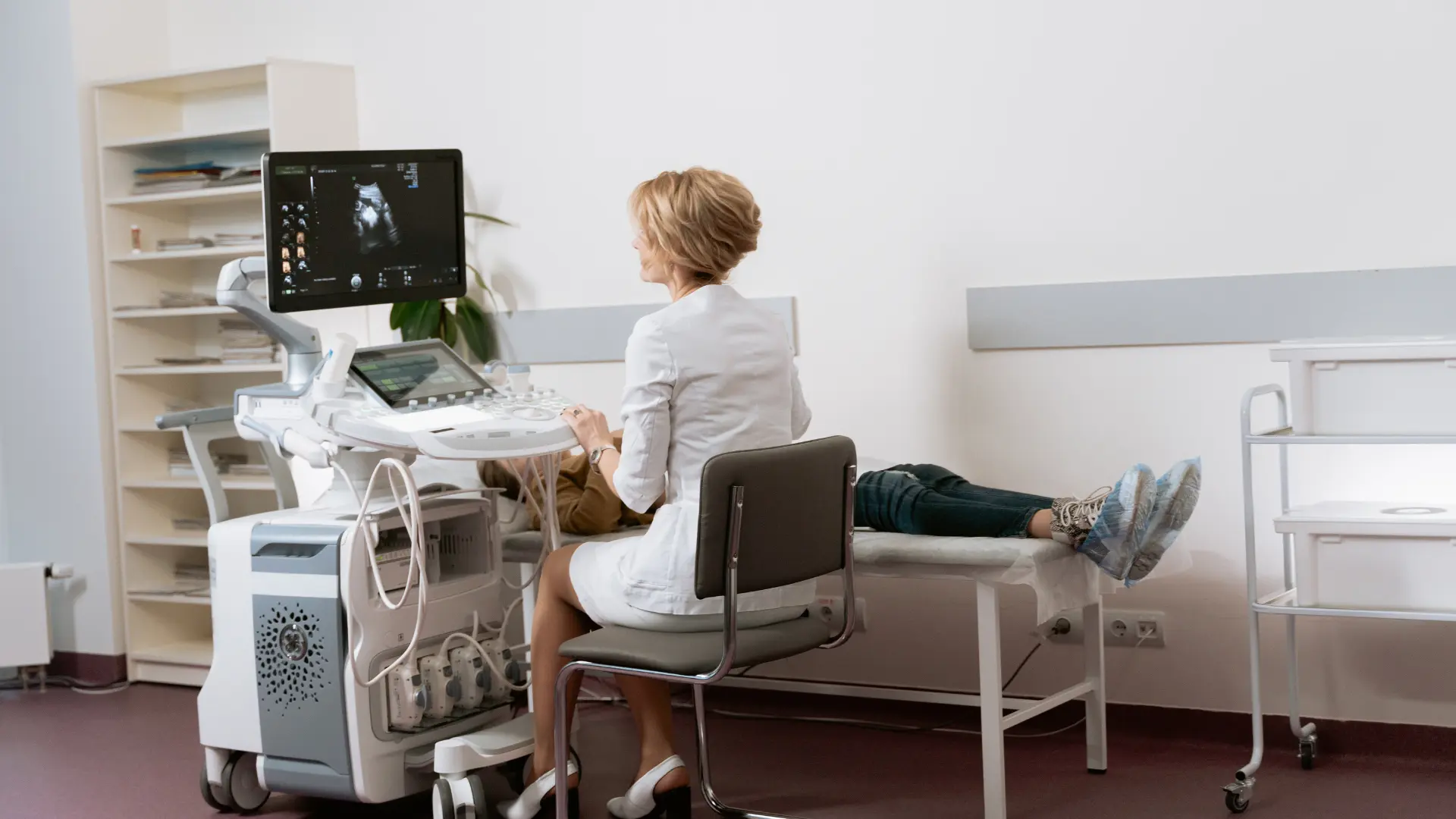
Pelvic Ultrasound: A Window Inside
Ultrasound imaging provides the physician with a clear visualization of the uterus, ovaries, and endometrium. This non-invasive, painless method can identify:
- Fibroids and endometrial polyps;
- Ovarian cysts and functional formations;
- Early signs of endometriosis;
- Structural anomalies that may affect fertility.
Ultrasound allows hidden pathologies to be detected long before they manifest as symptoms.
Laboratory Diagnostics: Examining the Microscopic Picture
Vaginal Swab for Flora and Hidden Infections
Modern techniques such as Femoflor or PCR testing enable detection of asymptomatic infections: bacterial vaginosis, candidiasis, chlamydia, trichomoniasis, and other sexually transmitted infections. Often these conditions produce no obvious symptoms, yet left untreated, they can lead to chronic inflammation, conception difficulties, or complications during pregnancy.
Hormonal Profile
When indicated, your doctor may order hormone testing—oestrogen, progesterone, prolactin, FSH, LH, and others. These analyses help clarify the causes of irregular cycles, weight fluctuations, mood changes, or fertility concerns.
Discussing Contraception and Family Planning
Your appointment is also an opportunity to discuss suitable contraceptive options or preparation for pregnancy. Your physician will help you select a method that is effective, safe for your health profile, and convenient for your lifestyle.
A regular gynecological visit is far more than a brief check “in the chair.” It is a comprehensive diagnostic process encompassing data collection, visual examination, laboratory testing, and tailored recommendations. This approach empowers women to take control of their health, prevent complications, and move forward with confidence.
What Can Be Detected at an Early Stage
The greatest value of regular gynecological examinations lies in their ability to reveal changes before a woman experiences any symptoms. In their early phases, most conditions develop silently—without pain, without pronounced discomfort, without obvious warning signs. And therein lies their insidious nature.
Hormonal Imbalances
Hormonal disturbances rarely begin abruptly. Initially, they may manifest as mild fatigue, subtle mood shifts, more pronounced premenstrual syndrome, or minor cycle irregularities. A woman might think: “I’ve been stressed,” “I haven’t slept enough,” or “It’s just my age.”
However, targeted testing and clinical observation can identify alterations in oestrogen, progesterone, prolactin, or thyroid hormone levels long before serious consequences arise. This enables timely lifestyle adjustments, nutritional support, or gentle therapeutic intervention—preventing progression to infertility, significant weight changes, or chronic fatigue.
Endometriosis, Fibroids, and Polyps
These conditions can develop for years with minimal or no symptoms. Occasionally, a woman may notice slightly more painful periods or a modest increase in menstrual flow—and dismiss it as unimportant.
Ultrasound and clinical examination can detect:
- Small fibroid nodules;
- Endometrial polyps;
- Early-stage endometriosis.
When such findings are identified promptly, treatment can be minimally invasive, with an excellent prognosis. If detection is delayed, more extensive surgery and prolonged therapy may become necessary.
Precancerous Conditions
This is perhaps one of the most compelling reasons for regular visits. Cellular changes in the cervix cause no pain. A woman may feel entirely healthy.
This is precisely why routine Pap smears and examinations can identify atypical cells at a fully reversible stage. Your physician may recommend further diagnostic evaluation and initiate treatment long before oncology becomes a concern.
Early detection is a proven strategy for reducing the risk of serious disease.
Asymptomatic Infections
Many sexually transmitted infections can progress without symptoms. No pain, no discharge, no fever—yet an inflammatory process is already underway.
Over time, such infections may lead to chronic inflammation, adhesions, fertility challenges, or complications during pregnancy.
Regular swabs and PCR-based diagnostics allow problems to be identified at a stage when treatment is straightforward and brief.
The sooner a physician detects changes, the more readily they can be addressed. Early diagnosis almost always translates to less aggressive treatment, fewer complications, and a higher quality of life in the years ahead.
Recommended Frequency of Visits
How often you should see a gynecologist depends not only on age but also on your individual health history. Nevertheless, general guidelines can help you maintain consistent oversight.
Ages 18–29
Even in the absence of complaints and with a regular cycle, an annual examination remains essential. At this stage, it is important to monitor:
- Cervical health;
- Presence of asymptomatic infections;
- Hormonal balance if the cycle is irregular.
Many conditions in younger women progress silently, making prevention especially critical.
Ages 30+
After thirty, the approach becomes more individualized. If you have chronic conditions, cycle irregularities, pregnancy plans, or a family history of cancer, your physician may recommend more frequent visits.
This is also a key time to evaluate hormonal status, particularly if you experience fatigue, weight changes, or difficulties conceiving.
Ages 40+
After forty, screening becomes more comprehensive. In addition to the standard examination, greater attention is given to hormonal shifts, endometrial health, and risk of precancerous changes.
Your doctor may also suggest age-appropriate assessments—such as bone density evaluation or cardiovascular screening—since hormonal changes directly influence these systems.
How to Prepare for Your Appointment—and What to Ask
All too often, women arrive for their appointment “on the go”—between work, errands, and responsibilities. Once in the consulting room, they recall questions they meant to ask but have now forgotten. The result: a visit that feels perfunctory, with important matters left unaddressed.
Preparing for your appointment is not about anxiety. It is about effectiveness.
What to Do in Advance
A few days before your visit, take note of any changes in your condition—even those that seem minor.
For example:
- Has your cycle become shorter or longer?
- Has PMS intensified?
- Are you experiencing new pelvic or breast pain?
- Has the nature of vaginal discharge changed?
- Are you having sleep difficulties, heightened anxiety, or sudden mood swings?
- Has your libido decreased?
Our minds quickly forget details. Yet for your physician, those details matter. When you arrive with specific observations, the consultation becomes more precise and insightful.
If you have results from previous tests, ultrasounds, or reports from other specialists, bring them with you. This allows your doctor to assess trends over time rather than evaluating your situation in isolation.
Key Questions to Discuss with Your Doctor
Many women hesitate to ask questions, fearing they may seem “silly” or “inappropriate.” In matters of health, there are no inappropriate questions.
Be sure to discuss:
Fertility and Pregnancy Plans
Even if you are not planning a pregnancy immediately, it is valuable to understand the current state of your reproductive system. If you do plan to conceive, ask whether preparatory steps, additional testing, or lifestyle adjustments are advisable.
Contraception
Contraceptive choices must be personalized. What worked for a friend may not suit you. Hormonal profile, age, thrombosis risk, and lifestyle all influence the optimal selection.
Warning Signs
If you notice any changes—pain, unusual discharge, cycle irregularities, discomfort during intercourse—mention them. Even if symptoms are mild or infrequent.
Understanding Your Test Results
It is essential not simply to receive a report with numbers, but to understand what they mean for you. Sometimes values fall “within normal range” yet, given your age and symptoms, warrant monitoring.
Why Openness Matters
The more honestly and thoroughly you describe your condition, the more accurately your physician can assess risk. Gynecology is not solely about physical examination. It involves synthesizing a holistic picture: hormones, emotional well-being, lifestyle, and heredity.
Sometimes a single remark from a patient can guide the physician toward a diagnostic pathway that might otherwise have remained unexplored.
Regular Visits Are About Quality of Life
Many view prevention simply as a means of avoiding serious illness—and that is true. Yet its significance extends far further.
When a woman maintains regular gynecological follow-up, she:
- Experiences fewer episodes of chronic pain or advanced inflammatory conditions;
- Reduces her risk of infertility through timely problem identification;
- Minimizes the likelihood of precancerous or cancerous changes;
- Receives support during periods of hormonal transition;
- Feels confident in her body and at peace about her health.
There is another vital dimension: psychological comfort. When you know your health is under professional oversight, anxiety diminishes. You are no longer wondering “What if something is wrong?”—instead, you rely on facts and consistent monitoring.
Put simply, regular check-ups are a way to manage your health rather than merely react to crisis. This is a strategy in which you invest in prevention today so that tomorrow you are not fighting consequences.
Do not wait for symptoms. Even when you feel perfectly well, your body may be signaling quietly—without pain or obvious signs. A scheduled gynecological visit today is an investment in a future you wish to spend actively, healthily, and peacefully.
Schedule your next appointment now. Your future self will thank you.